Project work
AI-Driven Security & Documentation
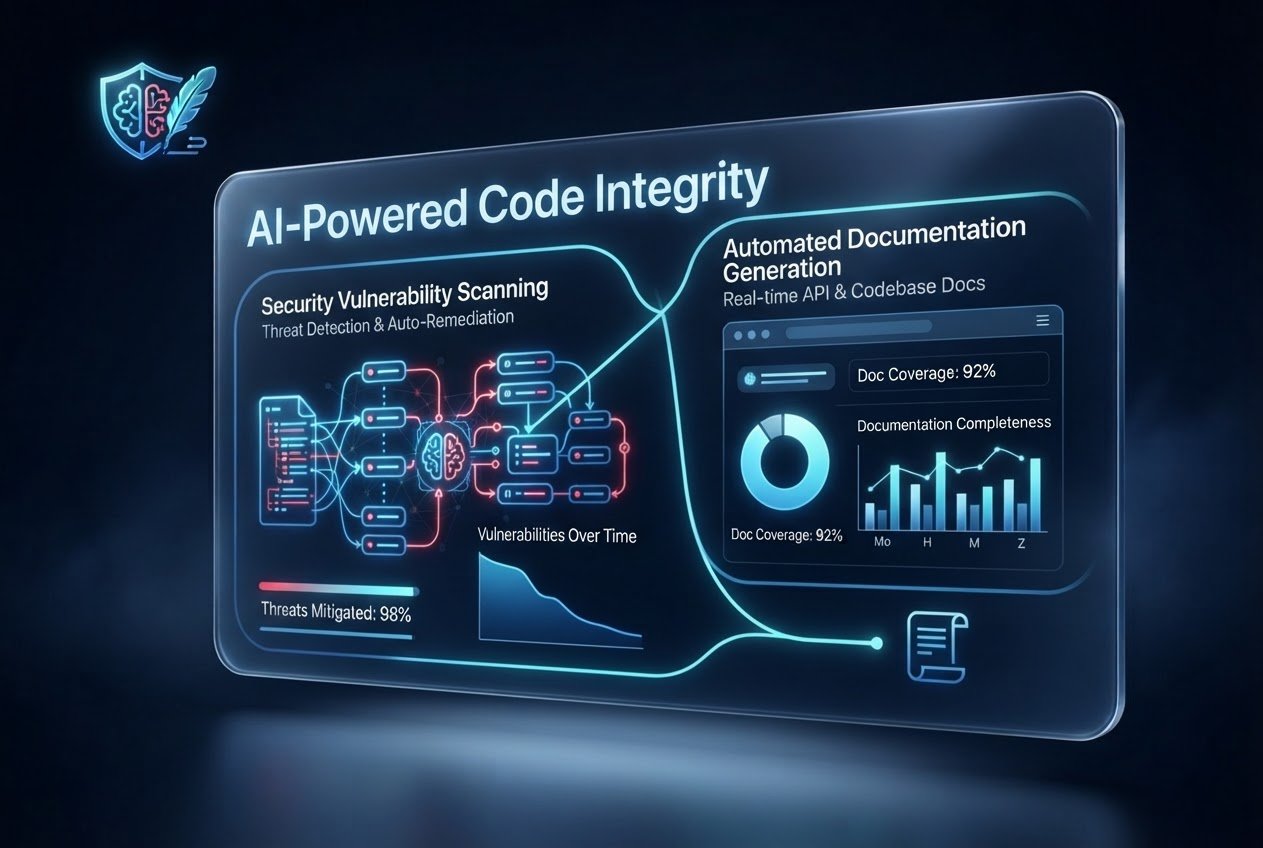
Introduction: AI’s Dual Edge – Risk and Opportunity
Artificial intelligence (AI) has become a double-edged sword in cybersecurity. While it enables sophisticated cyberattacks, it also offers transformative tools for defense. As a small simple example PHX (a recent passion-project of mine) focused on integrating AI into secure software development, exemplifying how AI can address long-standing challenges in IT. This demonstrates how AI is revolutionizing security practices and documentation, countering the narrative of its risks by demonstrating its potential to solve systemic issues in software development.
The Problem: Why Traditional Security Isn’t Enough
Software vulnerabilities remain a critical risk. According to the 2023 MITRE ATT&CK report, 70% of breaches exploit known vulnerabilities. Traditional methods: manual code reviews, static analysis, and reactive patching, struggle to keep pace with modern threats like AI-generated exploits or zero-day vulnerabilities. The tsunami of security patch waves from major vendors and.. constant zero-day shock-waves since about late 2025 are proof of this.
And there’s another, often overlooked problem: documentation. Historically, IT and software development documentation has been a persistent challenge. It has either been anemic, non-existent, or out of date and inaccurate. This creates a fragmented knowledge base, complicates onboarding, Impact up-time by complicating troubleshooting, and increases the risk of human error. For example, a 2022 Gartner study found that 68% of developers (seems low to me but OK) struggle with outdated documentation, leading to wasted time and security gaps.
AI as a Solution: Transforming Documentation & Security
What AI allows us to do practically effortlessly and for free is:
- Build and enforce threat modeling, SAST, and DAST into our CICD pipelines AND produce and submit audit-able artifacts proving The due diligence security work was done properly, all while documenting deliberate decisions and any residual risk
- Create consistent, near-perfect documentation in real time. By analyzing code, dependencies, and workflows, AI can auto-generate up-to-date documentation, ensuring accuracy and reducing the burden on developers. This is not just about convenience, it’s about eliminating a major source of human effort, error, and inefficiency.
Moreover, AI’s ability to process vast amounts of data means it can identify patterns and predict risks that humans might miss. For instance, AI can flag outdated libraries or insecure coding practices before they become vulnerabilities. This proactive approach aligns with PHX’s phased framework, which embeds security checks into every stage of development.
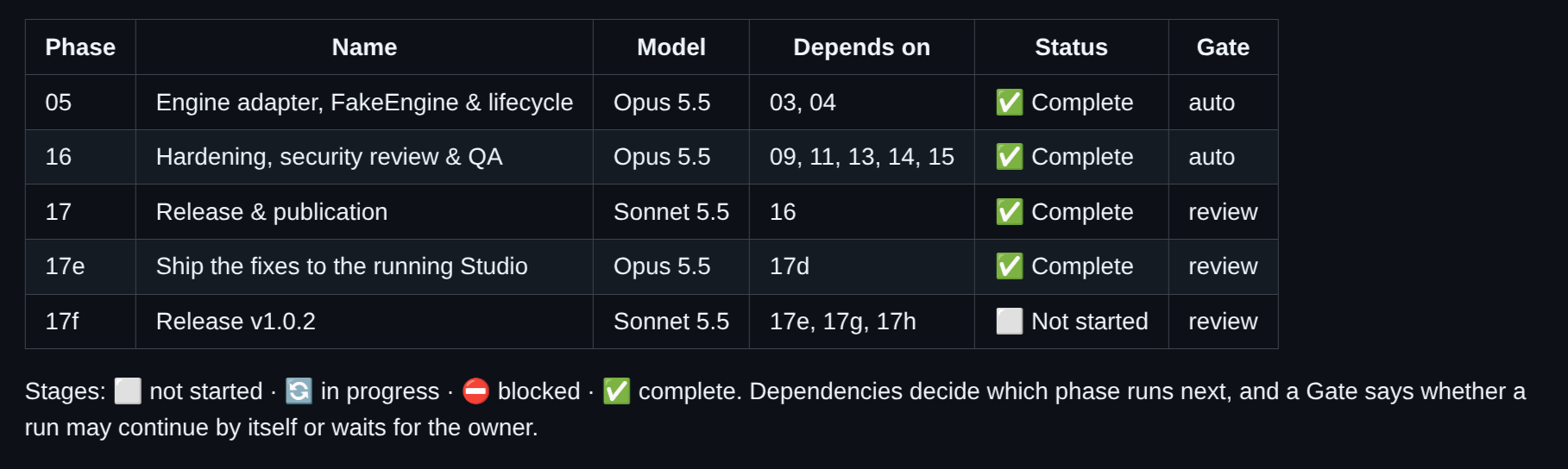
PHX: A Case Study in AI-Driven Security & Documentation
PHX is just one example of how AI can solve these systemic issues. By integrating AI into the software development lifecycle (SDLC), PHX addresses both security and documentation challenges simultaneously.
- Dynamic Code Analysis: AI scans code for vulnerabilities and auto-generates documentation, ensuring developers have real-time insights.
- Real-Time Security Testing: AI simulates attacks based on historical data, identifying weaknesses before deployment.
- Continuous Monitoring: AI tracks system behavior, updating documentation and alerting teams to emerging threats.
This holistic approach ensures that security is not an afterthought but an intrinsic part of development. PHX’s success lies in its ability to leverage AI’s strengths while mitigating its risks, such as over-reliance on automated systems.
The Road Ahead: AI as a Force for Good
The debate over AI’s role in cybersecurity is ongoing. Critics argue about job displacement, bias, and ethical concerns. However, the broader narrative must shift from fear to pragmatic adoption. AI’s ability to solve historical pain points from outdated documentation to reactive security proves its value.
Projects like PHX demonstrate that AI can be a force for good when used responsibly. By prioritizing proactive security and seamless documentation, AI empowers developers to build systems that are resilient, transparent, and secure by design.
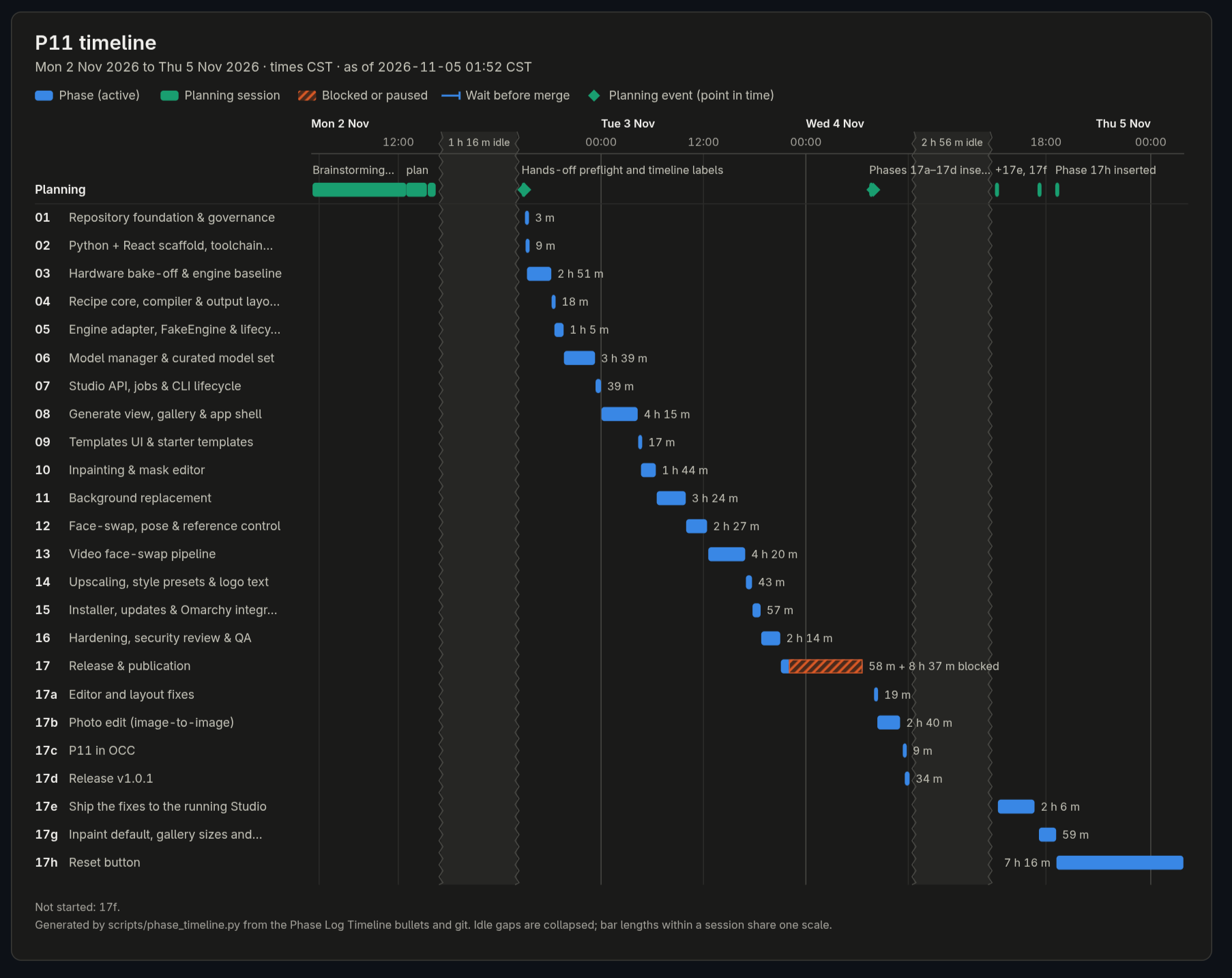
(this is a 100% auto-documented-generated image)
| Document | Purpose |
|---|---|
| docs/PHX_SPECIFICATION.md | Canonical spec (the Amendments section overrides earlier sections) |
| PHX_IMPLEMENTATION_PLAN.md | Phase table, status, owner questions, phase log |
| docs/PHX_DECISIONS.md | Architecture decision records |
| docs/PHX_ARCHITECTURE.md | Components and control flow |
| docs/PHX_GETTING_STARTED.md | Public guide: install the plugin and phx, run a first phased project |
| docs/PHX_USER_GUIDE.md | How to use phx |
| docs/PHX_THREAT_MODEL.md | Threats, ratings, mitigations and their tests, accepted risks |
| docs/PHX_PILOT_REPORT.md | Measured results of the real-token pilots |
| docs/PHX_FINAL-REPORT.md | v0.1.0 final report: Definition of done evidence, results, limitations, timeline |
| docs/PHX_AUTO_MODE_CONTRACT.md | Hands-off /phase NN --auto contract (version 1) shared by PHX and every phase command |
| docs/PHX_TIMELINE.svg | Generated picture of this project's planning and build (see the plan's Timeline; scripts/phase_timeline.py) |
| CLAUDE.md | Rules for AI agents working in this repo |

Conclusion: Building a Safer Tomorrow, One Line of Code at a Time
AI is not just a tool it’s a mind-set shift in how we approach software development and security. By addressing the systemic issues of documentation and vulnerability management, AI offers a path forward that is practical, efficient, and secure.
PHX is a testament to this potential. While challenges remain, the focus must remain on harnessing AI’s strengths to solve real-world problems, not amplifying its risks. As developers and security professionals, our task is to embrace this duality: using AI to create systems that are not only functional but safe, transparent, and future-ready.
Feel free to explore PHX’s code on GitHub.
github.com/antonizick/PhaseHypervisor